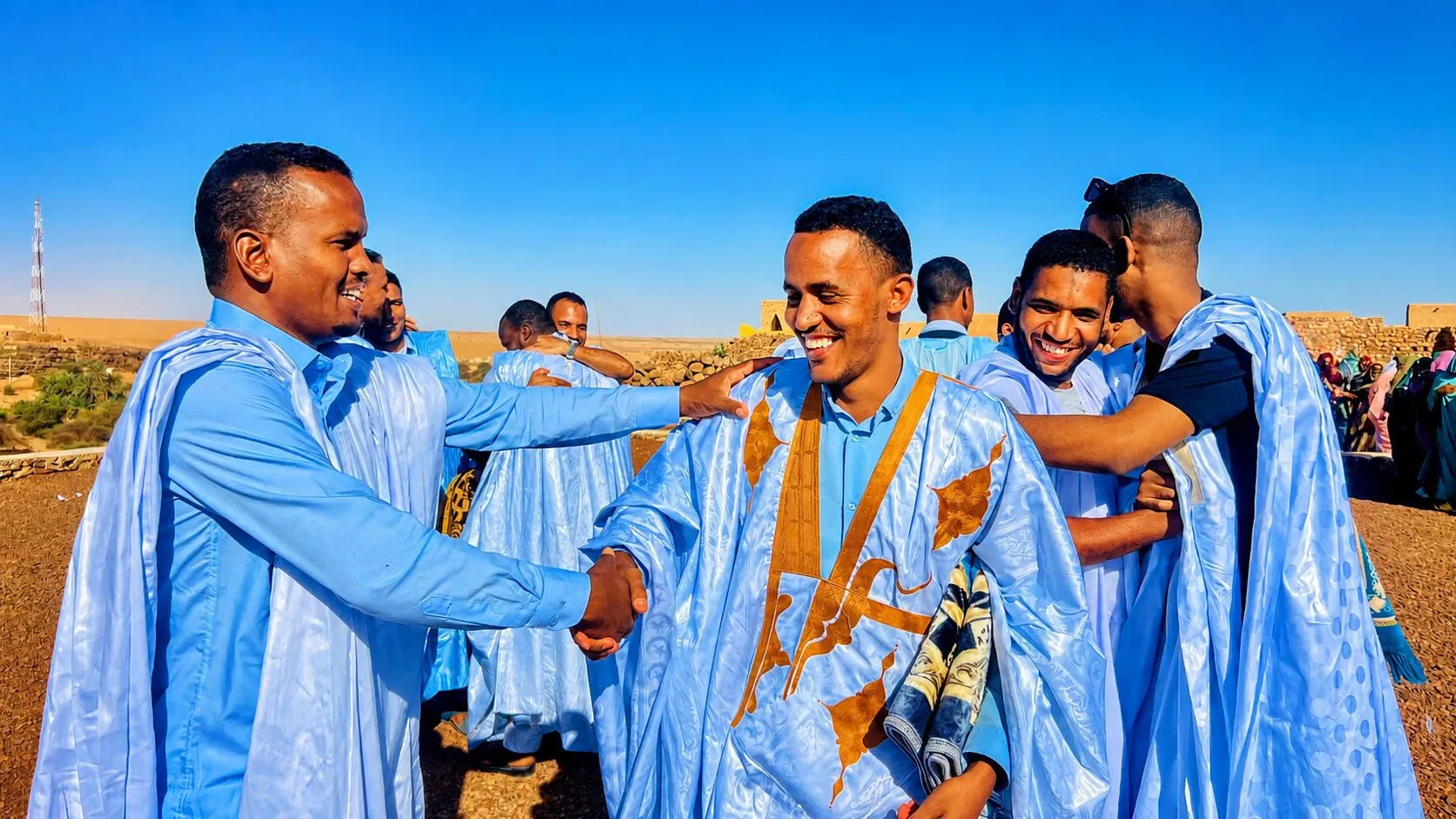
The Mauritanian Boubou: A Symbol of Identity, Elegance, and Desert Heritage
The Mauritanian Boubou: A Symbol of Identity, Elegance, and Desert Heritage
In the vast landscapes of the Sahara, where golden dunes meet ancient caravan routes, clothing has always been more than fashion. In Mauritania, the traditional boubou, locally known as the daraa or drâa, represents history, culture, identity, and adaptation to desert life. Flowing gracefully under the desert sun, the Mauritanian boubou remains one of the most iconic garments in West Africa and the Sahara.
For centuries, Mauritanian men have proudly worn the daraa as a symbol of dignity, elegance, and cultural belonging. Even today, despite the influence of modern fashion, the boubou continues to dominate daily life, ceremonies, weddings, and religious celebrations throughout the country.
Origins of the Mauritanian Boubou
The boubou is part of a larger West African clothing tradition that spread across the Sahel through trans-Saharan trade and the expansion of Islamic culture. Variations of the garment exist across several African countries, but the Mauritanian version — the daraa — has developed its own unique identity.
Historically, the garment was worn by traders, nomads, scholars, and nobles who crossed the Sahara Desert. The loose robe protected them from intense heat during the day and cold temperatures at night. Over time, the boubou became associated with prestige, refinement, and Moorish identity in Mauritania and neighboring Saharan regions.
The Design of the Daraa
The Mauritanian boubou is instantly recognizable because of its large flowing shape and wide open sleeves. It is usually made from a long rectangular fabric with an opening for the head and spacious panels on both sides that form the sleeves.
Its oversized structure is perfectly adapted to desert life. The garment allows air to circulate freely around the body, helping people remain cool in extremely hot temperatures. During hotter moments, the sleeves can even be rolled onto the shoulders for greater comfort.
The daraa is traditionally worn over loose trousers known as the sarouel, creating a complete outfit that combines comfort, modesty, and elegance.
Colors and Symbolism
The most common colors of the Mauritanian boubou are:
- Deep blue
- White
- Black
- Beige
Blue is especially iconic and strongly associated with Saharan and Moorish identity. White symbolizes purity and freshness under the desert sun. In Mauritania, the combination of blue fabric with golden embroidery creates one of the country’s most recognizable cultural symbols.
The beauty of the boubou often lies in its embroidery. Necklines, sleeves, chest areas, and borders are decorated with intricate golden or white patterns that demonstrate craftsmanship and social prestige.
Fabric and Craftsmanship
The quality of a daraa often reflects the social or economic status of the wearer. Simpler garments are made from lightweight cotton, while more luxurious versions are produced using bazin damask, a stiff and shiny fabric widely appreciated across West Africa.
Traditionally, some boubous were made of silk, but cotton and synthetic fabrics later became more common. Skilled tailors carefully cut and sew the garment to create its characteristic flowing shape and decorative embroidery. Every detail matters — from the quality of the stitching to the elegance of the embroidery patterns.
The Turban and Desert Protection
The Mauritanian boubou is often accompanied by a traditional turban known as the cheche or haouli. This long rectangular cloth is wrapped around the head and sometimes across the face to protect against sandstorms, wind, and harsh sunlight.
In desert culture, the turban is not simply decorative. It is an essential survival tool that shields the skin and eyes from the Sahara’s extreme environment. Together, the daraa, sarouel, and turban create a practical and elegant outfit perfectly suited to nomadic desert life.
The Boubou in Modern Mauritania
Despite globalization and Western fashion trends, the daraa remains deeply rooted in Mauritanian society. In cities such as Nouakchott and Atar, traditional clothing continues to be widely worn with pride.
The younger generation may combine traditional garments with modern accessories, but the cultural importance of the boubou remains unchanged. During weddings, religious feasts, Friday prayers, festivals, and official ceremonies, the elegant daraa is still considered essential attire.
For many Mauritanians, wearing the boubou is not only about tradition — it is about honoring heritage, expressing identity, and preserving a connection to the Sahara and ancestral customs.
A Living Cultural Heritage
The Mauritanian boubou is far more than a piece of fabric. It reflects centuries of Saharan history, Islamic influence, nomadic adaptation, and artistic craftsmanship. It tells the story of a people shaped by the desert, trade routes, and cultural exchange.
Today, the daraa continues to inspire admiration across Africa and beyond. Whether worn in the heart of the Sahara or during celebrations abroad, the flowing Mauritanian boubou remains a timeless symbol of elegance, resilience, and cultural pride.
Sources
- OutfitEN – Traditional Clothing in Mauritania
- BBC Travel – The Blue Men of the Sahara
- Kohan Textile Journal – Mauritania History, Culture and Textile
- Wikipedia – Boubou Clothing
- Global Diversity Hub – Dressing Code in Mauritania
- Custom Qamis – Traditional Dress of Mauritania
- WorldAtlas – The Culture of Mauritania
Written by
Wakaya Tours