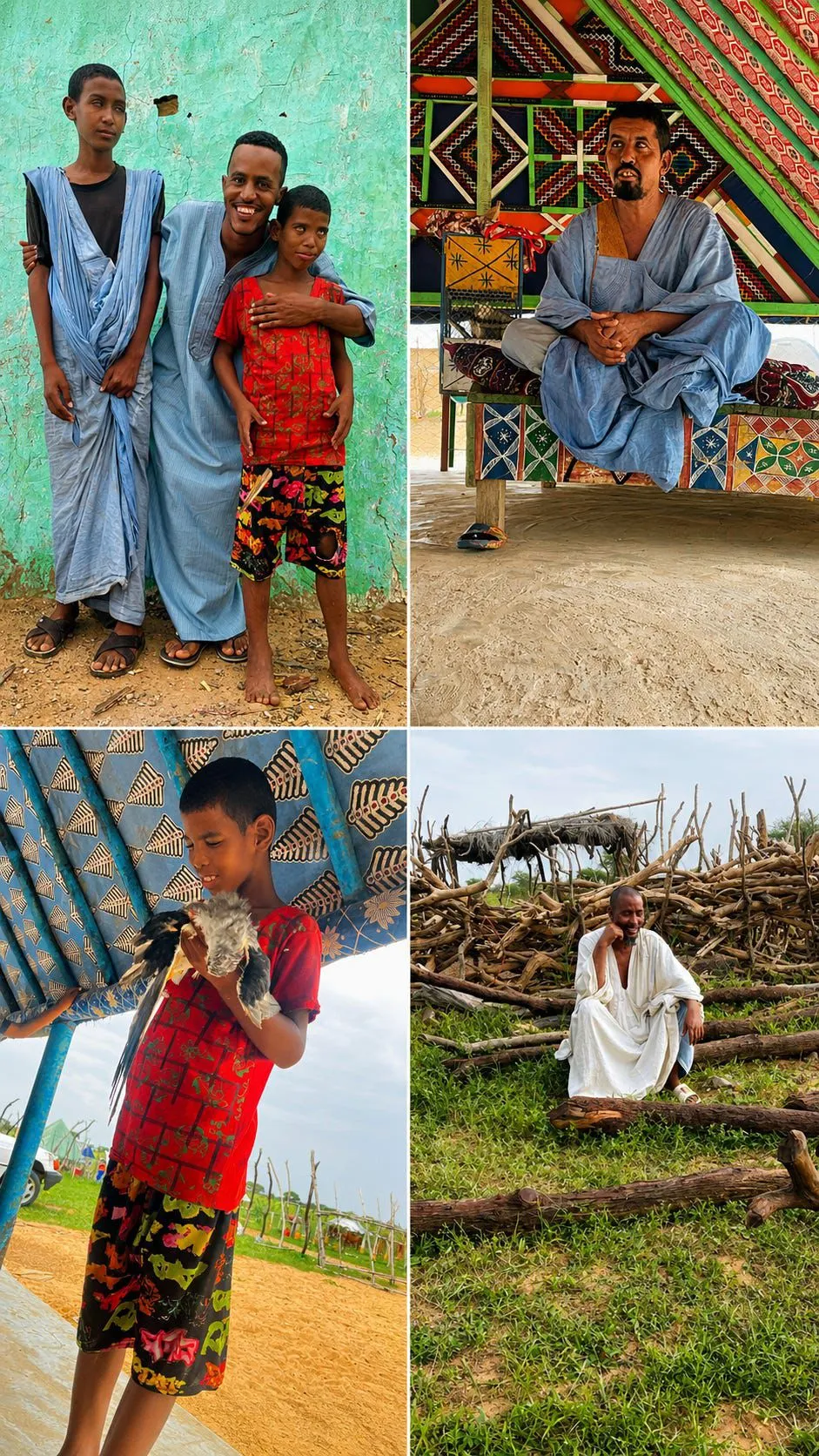
Dali Koumbe: The Mysterious Village of the Blind in the Mauritanian Sahara
Dali Koumbe: The Mysterious Village of the Blind in the Mauritanian Sahara
Deep in the southeastern reaches of Mauritania, far from the modern rhythms of the capital and hidden within the silence of the Sahara, lies one of the country’s most fascinating and least understood communities: Dali Koumbe, often called “the village of the blind.”
For generations, this isolated settlement near Timbédra has attracted curiosity because of the unusually high number of blind inhabitants living there. Yet beyond the mystery and sensational headlines lies a remarkable story of resilience, faith, adaptation, oral culture, and human dignity.
Dali Koumbe is not simply a “strange village” hidden in the desert. It is a living testimony to the strength of community life in one of the harshest environments on Earth.
Where Is Dali Koumbe?
Dali Koumbe is located in southeastern Mauritania, in the Hodh Ech Chargui region, near the town of Timbédra and not far from the Malian border. The village is extremely remote and can only be reached through long desert journeys across rough Saharan terrain.
The surrounding environment is characterized by:
- Vast sand plains
- Dry seasonal valleys
- Intense heat
- Limited vegetation
- Scarce water resources
Life in this part of Mauritania has always depended on endurance, solidarity, and deep environmental knowledge. Communities surviving in these conditions developed strong traditions of cooperation and oral transmission of knowledge, values that remain central to Dali Koumbe today.
Why Is Dali Koumbe Known as “The Village of the Blind”?
What makes Dali Koumbe unique is the unusually high number of blind residents living in the community. Across several generations, many children were reportedly born blind or developed severe visual impairments early in life.
Although no complete medical study has ever been conducted in the village, researchers and observers generally believe the condition is hereditary and linked to generations of marriages within a relatively isolated population.
However, within the village itself, blindness is often understood through spiritual and cultural narratives rather than purely medical explanations.
According to local oral tradition, an ancestor experienced a prophetic dream foretelling the birth of a righteous blind descendant. Over time, blindness became associated with destiny, spirituality, and divine wisdom rather than simply disability. This perspective deeply shaped how the community evolved socially and culturally.
A Community Built on Solidarity
One of the most inspiring aspects of Dali Koumbe is the way the community functions collectively.
Despite the prevalence of blindness, daily life continues through strong family structures and mutual support. Blind and sighted villagers cooperate naturally in everyday activities such as:
- Caring for livestock
- Preparing food
- Navigating the village
- Collecting water
- Teaching children
Visitors are often surprised by how independently blind residents move around the village. Having lived in the same environment since childhood, many develop extraordinary spatial memory and rely on sound, touch, smell, and familiarity with the landscape to navigate confidently.
In Dali Koumbe, blindness is not treated as social exclusion. Instead, blind individuals remain active participants in religious, cultural, and communal life.
Faith and Oral Tradition
Islam occupies a central place in the spiritual and social life of Dali Koumbe.
Several blind villagers became respected Qur’an teachers, religious scholars, and community elders. Since many residents cannot read written texts, oral learning traditions became especially important. Knowledge is preserved through:
- Memorization
- Storytelling
- Recitation
- Verbal teaching
Children learn religious teachings and local history through listening rather than reading. This strong oral culture has helped preserve the identity and continuity of the community for generations.
Faith also provides emotional strength and dignity in the face of hardship. For many villagers, blindness is not viewed as a punishment but as part of God’s will and a condition that can coexist with wisdom, spirituality, and social respect.
The Fascinating Tradition of Water Divination
Perhaps the most extraordinary aspect associated with Dali Koumbe is the reputation of some blind villagers as expert “water finders.”
For decades, neighboring communities reportedly sought the help of certain elders from the village to locate underground water sources in the desert. These individuals were believed to possess exceptional sensory abilities allowing them to identify areas where wells could be dug successfully.
Some accounts claim that famous water diviners from Dali Koumbe helped identify hundreds of wells across the Saharan region. Whether understood through spiritual intuition, environmental experience, or heightened sensory awareness, this reputation became a defining part of the village’s identity.
In the Sahara, where water means survival, the ability to locate underground reserves carries enormous cultural significance.
Challenges Facing the Village
Despite its fascinating cultural identity, Dali Koumbe faces serious social and economic challenges. The village suffers from:
- Geographical isolation
- Poor infrastructure
- Limited healthcare
- Lack of specialized eye treatment
- Inadequate educational resources
- Economic hardship
Road access remains difficult, especially during certain seasons, and access to modern medical services is extremely limited. Many residents have expressed frustration over decades of neglect and the absence of sustained governmental support. Scientific research into the causes of the blindness phenomenon has also remained limited.
Yet despite these challenges, the community continues to demonstrate remarkable resilience and social cohesion.
Beyond the Mystery: Understanding Dali Koumbe with Respect
International media often describe Dali Koumbe as mysterious or extraordinary. While the village certainly fascinates visitors and researchers, it is important to approach the community with dignity and respect rather than treating it as a spectacle.
Dali Koumbe is not only a story about blindness. It is a story about:
- Adaptation and human resilience
- Saharan culture and oral knowledge
- Spirituality and the power of community life in extreme environments
The village challenges common assumptions about disability by showing how an entire society can organize itself around cooperation, memory, and alternative sensory experiences.
Dali Koumbe and Cultural Tourism in Mauritania
Mauritania remains one of the world’s most authentic and least explored travel destinations. Beyond its dunes and ancient caravan cities, the country contains living cultural landscapes shaped by centuries of desert civilization.
For travelers interested in anthropology, cultural heritage, desert communities, and meaningful human encounters, Dali Koumbe represents one of the most unique stories in the Sahara.
However, responsible tourism is essential. Visitors should approach such communities with humility, sensitivity, and genuine curiosity rather than voyeurism.
At Wakaya Tours, we believe tourism should help preserve cultural dignity, support local communities, and promote deeper understanding of Mauritania’s rich human heritage.
Conclusion
Hidden in the silence of the Mauritanian Sahara, Dali Koumbe remains one of the country’s most remarkable communities. Its story is not merely about blindness. It is about endurance, adaptation, spirituality, and collective strength in the face of isolation and hardship.
In a rapidly changing world, Dali Koumbe reminds us that human societies can develop extraordinary ways of living, perceiving, and supporting one another — even in the most difficult environments. For those seeking to understand the deeper cultural soul of Mauritania, the story of Dali Koumbe offers a powerful and unforgettable window into the resilience of Saharan life.
Sources
- The New Arab — Mauritania: Blind villagers deserted by government
- OnePath Network — The Blind Muslim Tribe of the Sahara
- Africa Facts Corner — The Dali Koumbe People
- BusinessDay Nigeria — Dali Koumbe: Village of the Blind, a Century-Old Mystery
- Prime Star News — Discovery of Dali Koumbe’s Village of the Blind
- University of Michigan Dissertation — Blindness and Water Divination in the Saharan West
Written by
Wakaya Tours