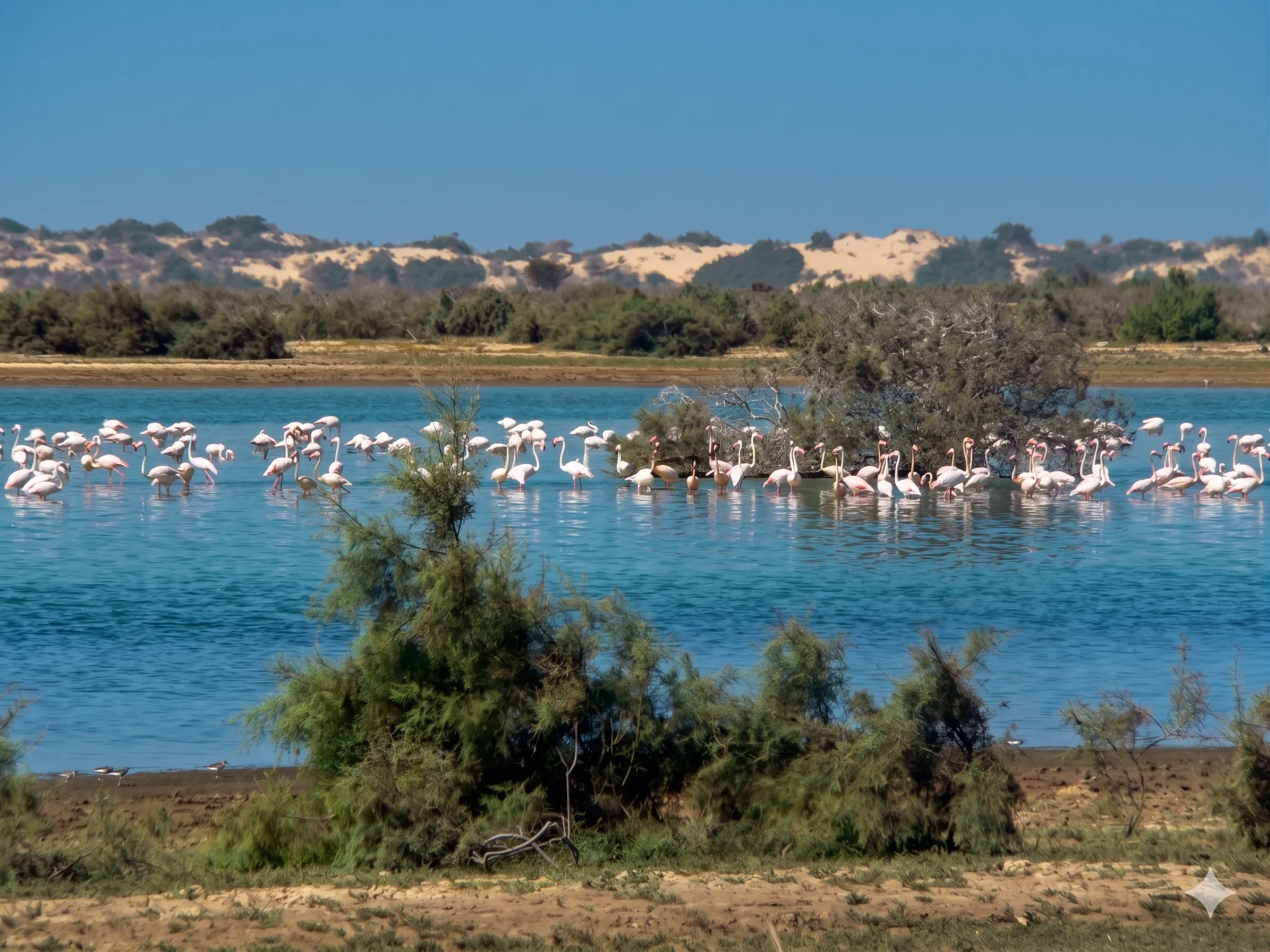
Diawling National Park: Mauritania’s Restored Wetland Paradise
Diawling National Park: Mauritania’s Restored Wetland Paradise at the Edge of the Sahara
Where Desert, River, and Ocean Meet
In the far southwest of Mauritania, where the waters of the Senegal River approach the Atlantic Ocean and the sands of the Sahara begin to dominate the landscape, lies one of West Africa’s most remarkable ecological treasures: Diawling National Park. Known in French as Parc National du Diawling, this vast protected wetland is far more than a national park. It is a story of environmental restoration, biodiversity conservation, and the successful coexistence of local communities and fragile ecosystems.
Established in 1991, Diawling National Park covers approximately 16,000 hectares, with an additional buffer zone of nearly 56,000 hectares in the lower Senegal River delta near the Mauritania–Senegal border. Today, the park is internationally recognized as:
- A Ramsar Wetland of International Importance
- An Important Bird Area (IBA)
- One of West Africa’s most successful ecological restoration projects
Once devastated by drought and hydrological disruption, Diawling has become a thriving sanctuary for migratory birds, wetland ecosystems, and sustainable community-based conservation.
Geography: A Rare Wetland at the Edge of the Sahara
Diawling National Park occupies a unique geographical position in the Trarza Region of southwestern Mauritania. The park lies where the Senegal River delta, Atlantic coastal ecosystems, and Sahara Desert landscapes converge to form one of the most ecologically diverse environments in Mauritania.
The interaction between freshwater from the Senegal River and saltwater from the Atlantic Ocean creates a mosaic of interconnected ecosystems including:
- Seasonal floodplains
- Coastal lagoons
- Mangrove swamps
- Estuarine systems
- Marshes and wetlands
- Saline flats
- Sand dunes
Historically, annual flooding from the Senegal River replenished soils, supported fish reproduction, sustained vegetation, and created ideal habitats for migratory birds. During the rainy season, large sections of the park transform into expansive wetlands rich in aquatic life. In the dry season, waters retreat to reveal open plains and feeding grounds for wildlife.
The Environmental Crisis of the 1970s and 1980s
The creation of Diawling National Park was directly linked to one of the most severe environmental crises in the history of the Senegal River basin. During the 1970s and 1980s, the Sahel experienced devastating droughts that caused reduced river discharge, wetland degradation, desertification, and fish population collapse.
At the same time, major hydraulic infrastructure projects like the Diama Dam (1986) and the Manantali Dam (1988) altered the natural flooding cycle. While these dams supported economic development, they disrupted the natural flood regime that sustained the delta ecosystem for centuries. Wetlands dried up, migratory birds disappeared, and local livelihoods based on fishing and grazing suffered.
Recognizing the urgency of the ecological collapse, the Mauritanian government established Diawling National Park in 1991 to restore the wetlands and revive biodiversity.
A Model of Ecological Restoration
What makes Diawling exceptional is that it is an actively managed ecosystem designed to recreate natural environmental processes through hydrological restoration. Hydraulic structures, dikes, canals, and water-control systems were constructed to restore seasonal flooding patterns.
Over the past three decades, these restoration efforts have produced extraordinary ecological results:
- Wetlands have returned
- Fish populations have recovered
- Birdlife has increased dramatically
- Vegetation has regenerated
- Local livelihoods have improved
Diawling is now internationally recognized as one of Africa’s leading examples of ecological restoration and adaptive wetland management.
One of West Africa’s Greatest Bird Sanctuaries
Diawling National Park is internationally renowned for its avian biodiversity and forms part of a transboundary ecological system connected to Senegal’s Djoudj National Bird Sanctuary. Together, these wetlands constitute one of the most important migratory bird habitats in West Africa.
Scientists have recorded:
- Between 220 and 300 bird species
- Approximately 130 migratory species
Among the most iconic species are greater and lesser flamingos, great white pelicans, Eurasian spoonbills, northern pintails, black storks, and Caspian terns. During migration seasons, thousands of birds travel between Europe and Africa and stop in Diawling to feed, nest, and breed.
Wildlife Beyond Birds
Although birdlife is Diawling’s most famous attraction, the park also supports a variety of mammals and reptiles adapted to wetland conditions, including warthogs, patas monkeys, African wildcats, African golden wolves, hyenas, and monitor lizards. The return of seasonal flooding has also revitalized fish populations essential for local communities.
Community-Based Conservation and Sustainable Development
One of the most innovative dimensions of Diawling National Park is its integration of local communities into conservation efforts. Today, local communities actively participate in sustainable fishing, controlled grazing, environmental monitoring, and eco-tourism initiatives. This participatory approach demonstrates that biodiversity conservation can succeed when local populations directly benefit from ecological restoration.
Tourism and Visitor Experience
Despite its ecological importance, Diawling remains an authentic eco-tourism destination. Visitors can enjoy:
- Birdwatching excursions
- Guided wetland tours
- Canoe trips through lagoons and reed beds
- Wildlife photography
- Cultural encounters with local communities
The best period to visit is generally from November to April, when migratory birds are most abundant and temperatures are more comfortable.
Conclusion: Mauritania’s Wetland Miracle
Diawling National Park is a living example of restoration, resilience, and ecological renewal. Its wetlands, bird colonies, and community conservation programs make it one of Mauritania’s most extraordinary natural treasures. For travelers and nature lovers, Diawling offers a rare opportunity to witness one of Africa’s great environmental success stories.
Explore Diawling with Wakaya Tours
Wakaya Tours invites you to discover the hidden wetlands of Mauritania through immersive eco-tourism experiences at Diawling National Park. Explore bird sanctuaries, floodplains, traditional communities, and extraordinary desert-water landscapes with expert local guides and sustainable travel experiences designed for nature lovers and adventurous travelers alike.
Written by
Wakaya Tours