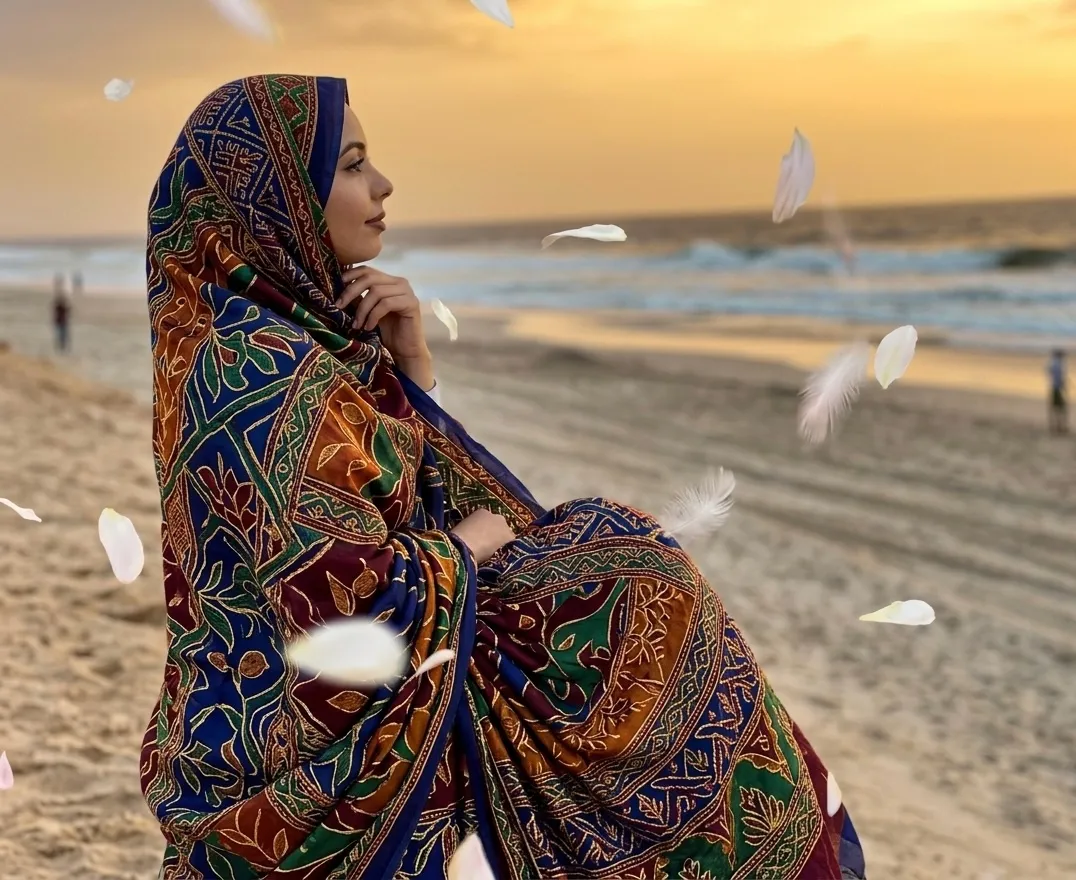
The Melehfa: The Flowing Elegance of Mauritanian Women
The Melehfa: The Flowing Elegance of Mauritanian Women
In the vast golden landscapes of the Sahara, where tradition and resilience have shaped generations, one garment continues to define the beauty, identity, and cultural pride of Mauritanian women: the Melehfa.
Graceful, colorful, and deeply symbolic, the Melehfa is far more than traditional clothing. It is a living expression of history, femininity, heritage, and desert life. Across Mauritania, from the bustling streets of Nouakchott to the ancient ksour of Ouadane and Chinguetti, the flowing fabric of the Melehfa tells stories of identity, elegance, and cultural continuity.
What Is the Melehfa?
The Melehfa is the traditional garment worn by women in Mauritania and across parts of the Sahara-Sahel region. It consists of a long rectangular piece of lightweight fabric, usually wrapped around the body and head in a graceful and fluid style.
Unlike stitched dresses, the Melehfa is a single cloth draped carefully to create a flowing silhouette. The fabric covers the body modestly while allowing freedom of movement and comfort in the desert climate.
The beauty of the Melehfa lies not only in its appearance but also in the artistry of wearing it. Every woman develops her own wrapping style, reflecting personality, elegance, and cultural influence.
A Garment Born from the Desert
The Melehfa evolved over centuries within the harsh environment of the Sahara. Designed for life in hot and sandy conditions, it perfectly combines practicality with beauty.
Its loose and airy structure helps protect women from:
- Intense desert heat
- Strong sunlight
- Sandstorms
- Dry winds
At the same time, the lightweight fabric allows airflow and comfort during daily activities. For generations of nomadic and semi-nomadic communities, the Melehfa became an essential part of life in the desert. It adapted naturally to caravan culture, mobility, and the rhythms of Saharan society.
A Symbol of Identity and Pride
In Mauritania, the Melehfa is one of the strongest symbols of national and cultural identity. Wearing the Melehfa represents:
- Dignity and modesty
- Femininity and elegance
- Belonging to a rich heritage
Young girls often learn how to wear it from mothers, sisters, and grandmothers. The process of wrapping the fabric is passed down through generations, making the Melehfa both a cultural tradition and a form of inherited knowledge.
For many Mauritanian women, the Melehfa is also a source of pride. Whether worn in daily life, at weddings, during religious celebrations, or at cultural festivals, it reflects a strong connection to heritage and community.
Colors That Reflect the Spirit of Mauritania
One of the most striking aspects of the Melehfa is its extraordinary use of color. Mauritanian women are famous for wearing vibrant and expressive fabrics featuring:
- Bright blues and golden yellows
- Deep purples and vivid pinks
- Emerald greens and rich reds
- Colorful floral or geometric prints
These colors bring life and movement to the desert environment, creating a beautiful contrast against the sands of the Sahara.
Some Melehfas are simple and practical for everyday use, while others are luxurious garments reserved for weddings and special occasions. Ceremonial Melehfas may include embroidery, sequins, decorative borders, and fine imported fabrics.
The Art of Wearing the Melehfa
Wearing a Melehfa is considered an art form in itself. The fabric must be wrapped carefully to achieve the elegant flowing style that Mauritanian women are known for. The draping technique varies depending on:
- Region and occasion
- Personal preference
- Current fashion trends
The way the fabric flows around the body creates a unique elegance that is instantly recognizable throughout the Sahara. In many ways, the Melehfa represents movement itself — soft, fluid, and graceful like the desert wind.
Tradition Meets Modern Fashion
Although deeply traditional, the Melehfa continues to evolve with modern fashion trends. Today, Mauritanian designers and young women are reinventing the garment through modern fabrics, bold prints, luxury materials, and contemporary styling.
Social media and fashion photography have also helped introduce the Melehfa to international audiences. Across Africa and beyond, the garment is increasingly recognized as one of the most elegant traditional outfits of the Sahara-Sahel region.
Yet despite these modern influences, the essence of the Melehfa remains unchanged: a powerful expression of cultural identity.
More Than Clothing
The Melehfa is not simply something women wear. It is part of Mauritania’s cultural memory. It reflects:
- Centuries of Saharan history
- The resilience of desert communities
- The creativity of women
- The enduring beauty of tradition
For visitors traveling through Mauritania, seeing women dressed in colorful Melehfas is one of the country’s most unforgettable cultural experiences. The flowing garments add life, movement, and color to markets, celebrations, desert towns, and historic caravan cities. The Melehfa is, in many ways, the visual poetry of Mauritania.
Preserving a Living Heritage
As globalization transforms fashion across the world, the Melehfa continues to survive because it remains deeply connected to identity and daily life. Mauritanian women continue to wear it proudly not only as tradition, but as a statement of belonging and cultural continuity.
In a rapidly changing world, the Melehfa stands as a reminder that heritage can remain vibrant, elegant, and alive.
Conclusion
The Melehfa is one of Mauritania’s greatest cultural treasures. Flowing through the sands of the Sahara for centuries, it embodies beauty, modesty, resilience, and identity.
More than a garment, it is a story woven into fabric — a symbol of the women who have preserved Mauritania’s traditions across generations. Elegant and timeless, the Melehfa continues to define the spirit of Mauritanian culture today.
Written by
Wakaya Tours