Nouakchott: Where the Sahara Meets the Atlantic
Nouakchott: Where the Sahara Meets the Atlantic
A Young and Dynamic Capital
Nouakchott, the capital of Mauritania, is a city unlike any other in Africa. It is young, fast-growing, sandy, and deeply connected to both the Sahara Desert and the Atlantic Ocean. While it lacks ancient ruins, it offers something arguably more powerful: the real rhythm of modern Mauritania. From the bustling fishing docks to the vibrant open-air markets, Nouakchott is where the country’s diverse cultures and landscapes converge.
Founded in 1958 as the capital for the soon-to-be independent state, Nouakchott has grown from a small fishing village into the political and commercial heart of the nation. It is the gateway for almost every traveler entering Mauritania.
Port de Pêche: The Soul of Nouakchott
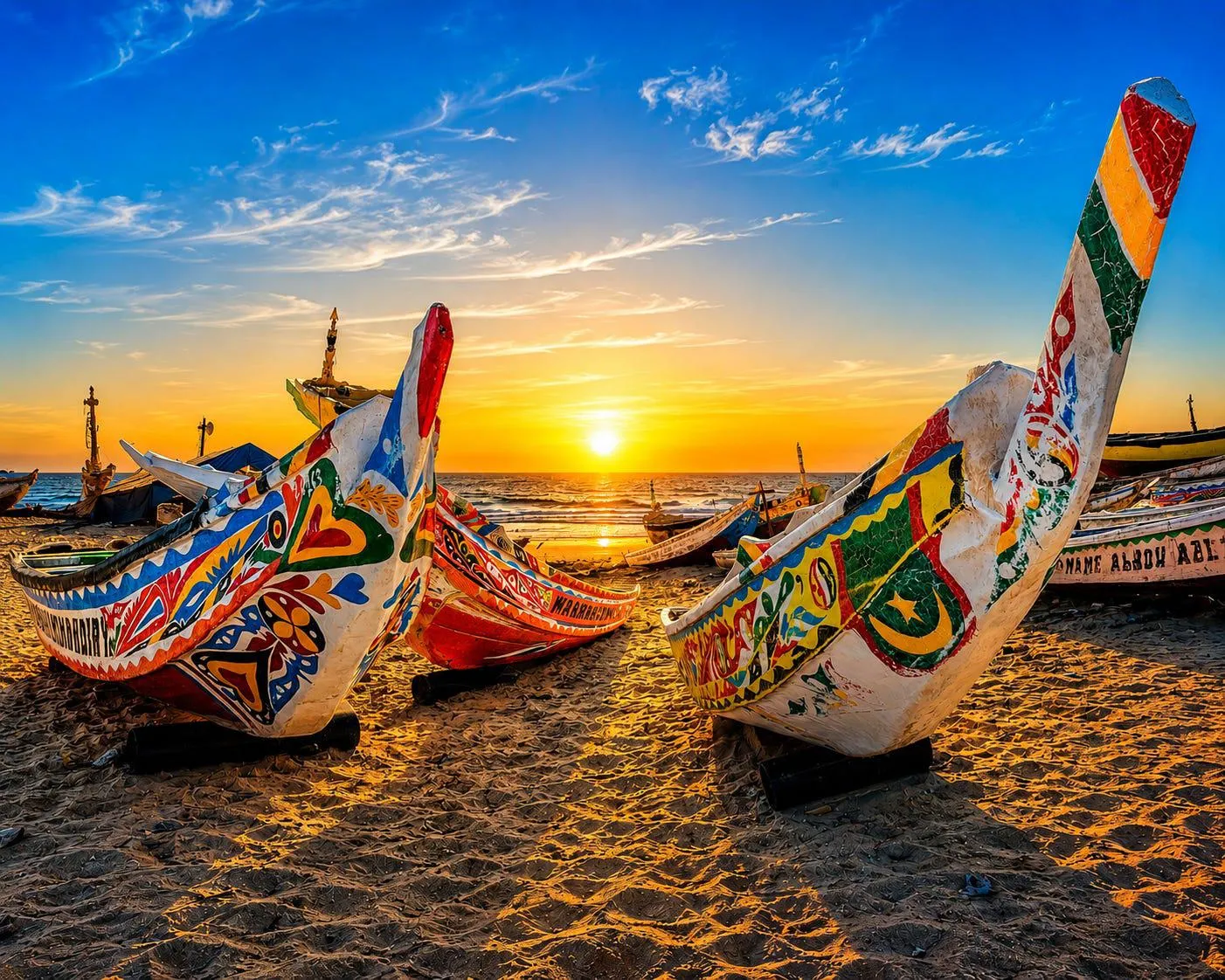
The Port de Pêche is the most iconic site in the city. This isn’t a decorative harbor; it is a massive, working fishing port. Hundreds of brightly painted wooden boats line the shore, where fishermen battle the Atlantic waves to bring in their daily catch.
Early in the morning or late in the afternoon, the beach is a sea of movement—workers unloading fish, traders negotiating prices, and the smell of the ocean mixing with the Saharan air. It is the best place to witness the vital link between Nouakchott and the sea.
Cultural Foundations
To truly understand Mauritania, a visit to the National Museum is essential. It houses archaeology, traditional clothing, and manuscripts that tell the story of the country’s Saharan identity and its historic role in trans-Saharan trade.
The city is also defined by its religious landmarks, most notably the Saudi Mosque (Mosque Saudique). Its twin minarets dominate the central skyline and serve as a visible symbol of Islam’s central role in Mauritanian society.
Markets and Craftsmanship
Nouakchott is a city of trade. Marché Capitale and Marché Artisanal are the places to go for authentic Mauritanian textiles, leather goods, and jewelry. Here, you can find hand-woven rugs, traditional samara sandals, and intricate silverwork that reflect centuries of Saharan craftsmanship.
Life by the Ocean
Beyond the busy markets, Nouakchott Beach offers a natural escape. This wide stretch of Atlantic sand is a favorite spot for locals to relax, enjoy the sea breeze, and watch the sunset. Nearby restaurants serve some of the freshest grilled fish you will find anywhere in West Africa.
The Ritual of Tea
No visit to Nouakchott is complete without experiencing ataya—Mauritanian tea. This strong, sweet green tea with mint is more than just a drink; it is a social ritual. Sharing tea represents hospitality, patience, and friendship—the very core of Mauritanian culture.
Conclusion: An Honest Introduction
Nouakchott is raw, real, and full of life. It is the place where the Sahara meets the Atlantic, and where the story of modern Mauritania continues to unfold. While many travelers use it only as a transit point to the desert, those who take the time to explore its streets will find a city that is as resilient as the Sahara and as vast as the Atlantic.
Start Your Journey with Wakaya Tours
Wakaya Tours welcomes you to Nouakchott. As your gateway to Mauritania, we provide personalized tours of the capital and seamless transfers to the desert interior. Let us show you the “hidden gems” of the capital before we take you deep into the heart of the Sahara.
Written by
Wakaya Tours